
In the province of Adana, south-central Türkiye, there is a 80 kilometre-long corridor between the historical Horzum zinc mine in the south and the historical Ak cal/Belbasi zinc mines near Tufanbeyli in the north. This area is underlain by a northeast-southwest trending belt of carbonate-dominated rocks, the Horzum Zinc Trend (HZT), known to host Carbonate Replacement-type zinc-lead deposits. There are several known historical small high-grade oxide zinc deposits in these rocks but the HZT had never been systematically explored using modern, advanced exploration techniques and models. The potential is strong for discovery of new much larger oxide and sulphide zinc deposits.
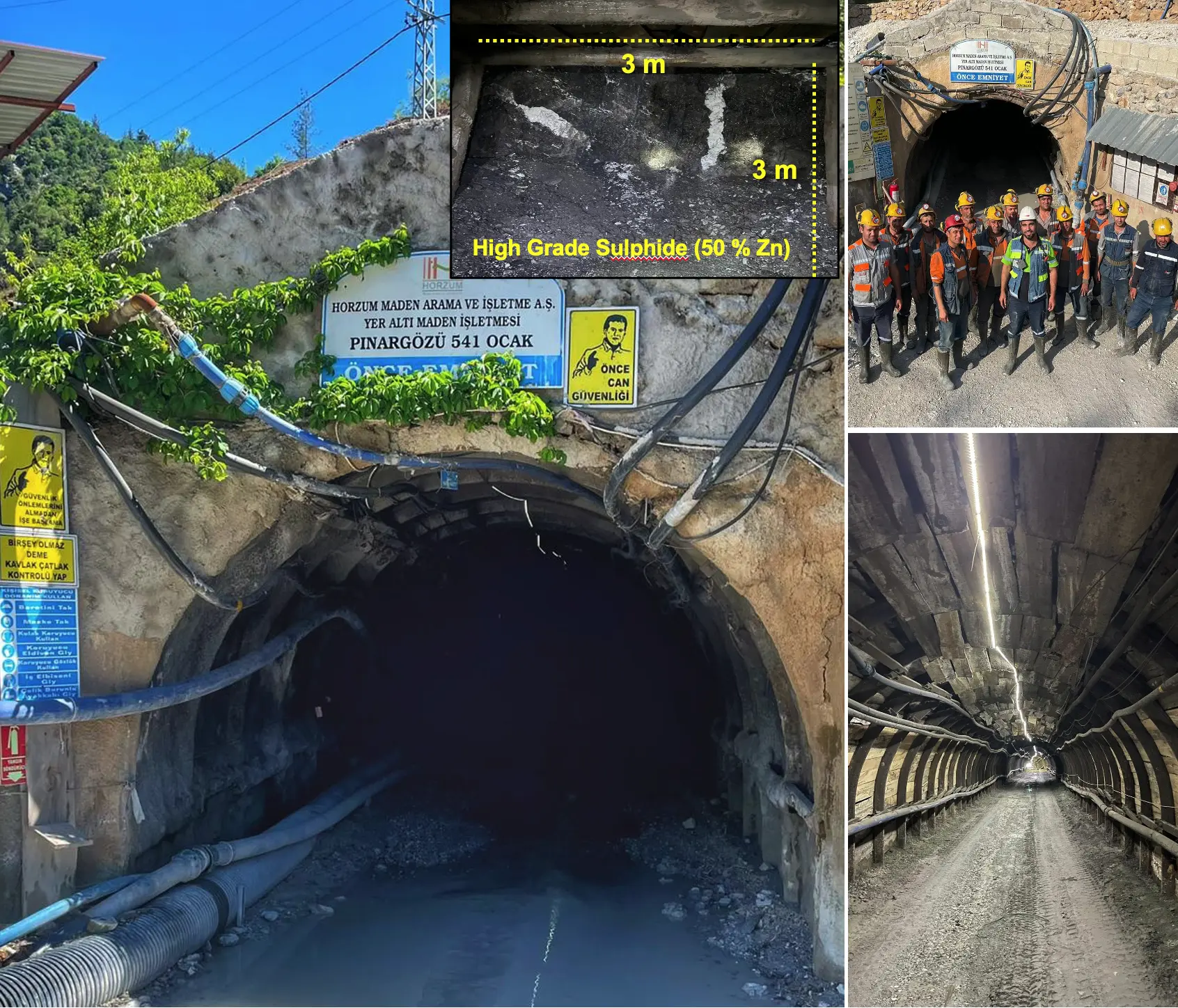
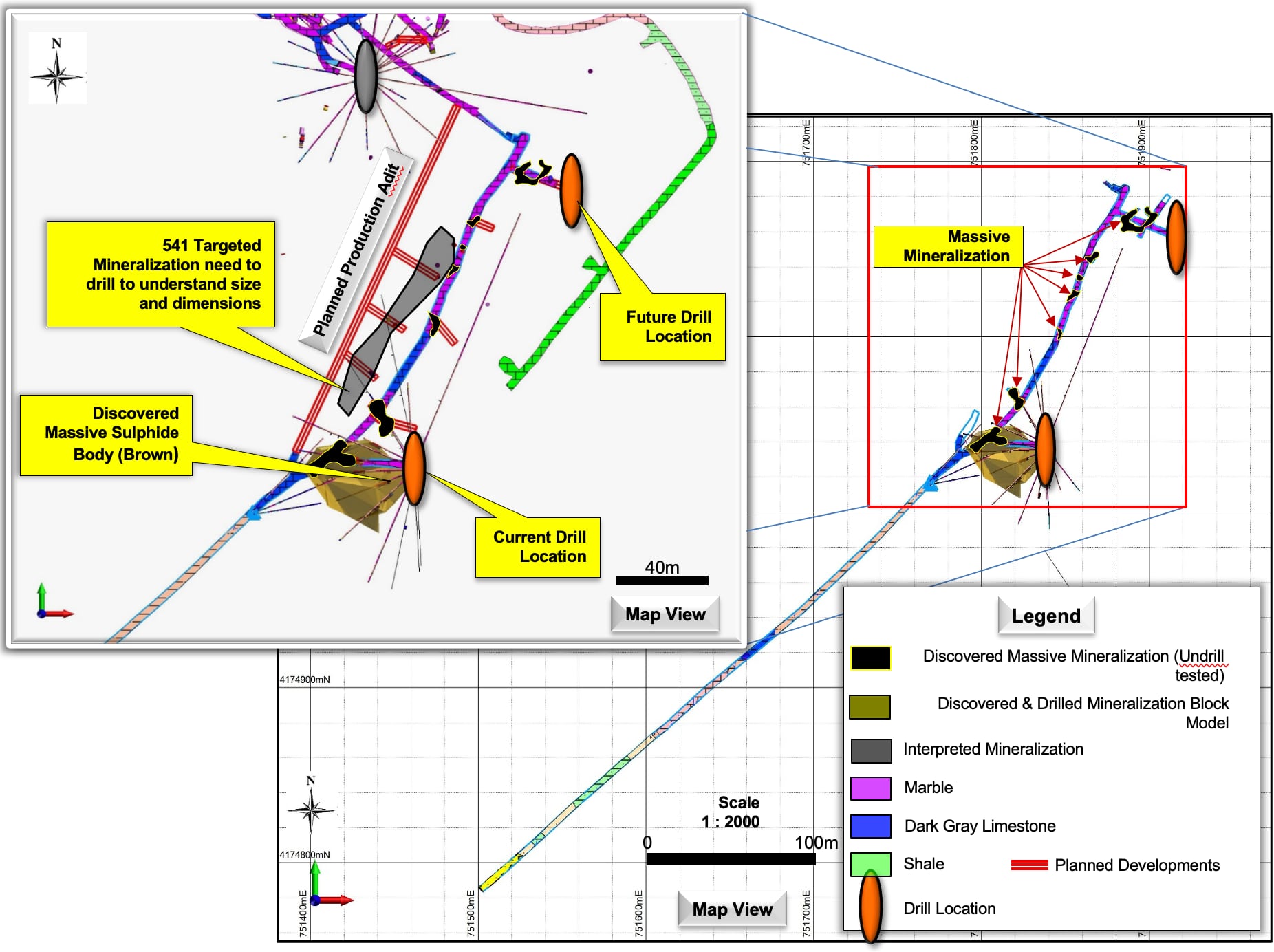
Multiphase mineralization resulted extraordinary high-grade Pinargozu deposit. Mineralisation formed from typical CRD (Carbonate Replacement Deposit) processes. Pasinex owns 100% of the Pinargozu Mine which is an exceptionally high-grade zinc (48-52%) mine near Adana, Türkiye. The average grade of mined zinc sulphide is 49%.
Pinargozu Zinc mine has been producing Direct Shipping Ore since 2015 and over 200,000 tons of avarege over 40% Zn carbonate and mostly sulphide zinc.
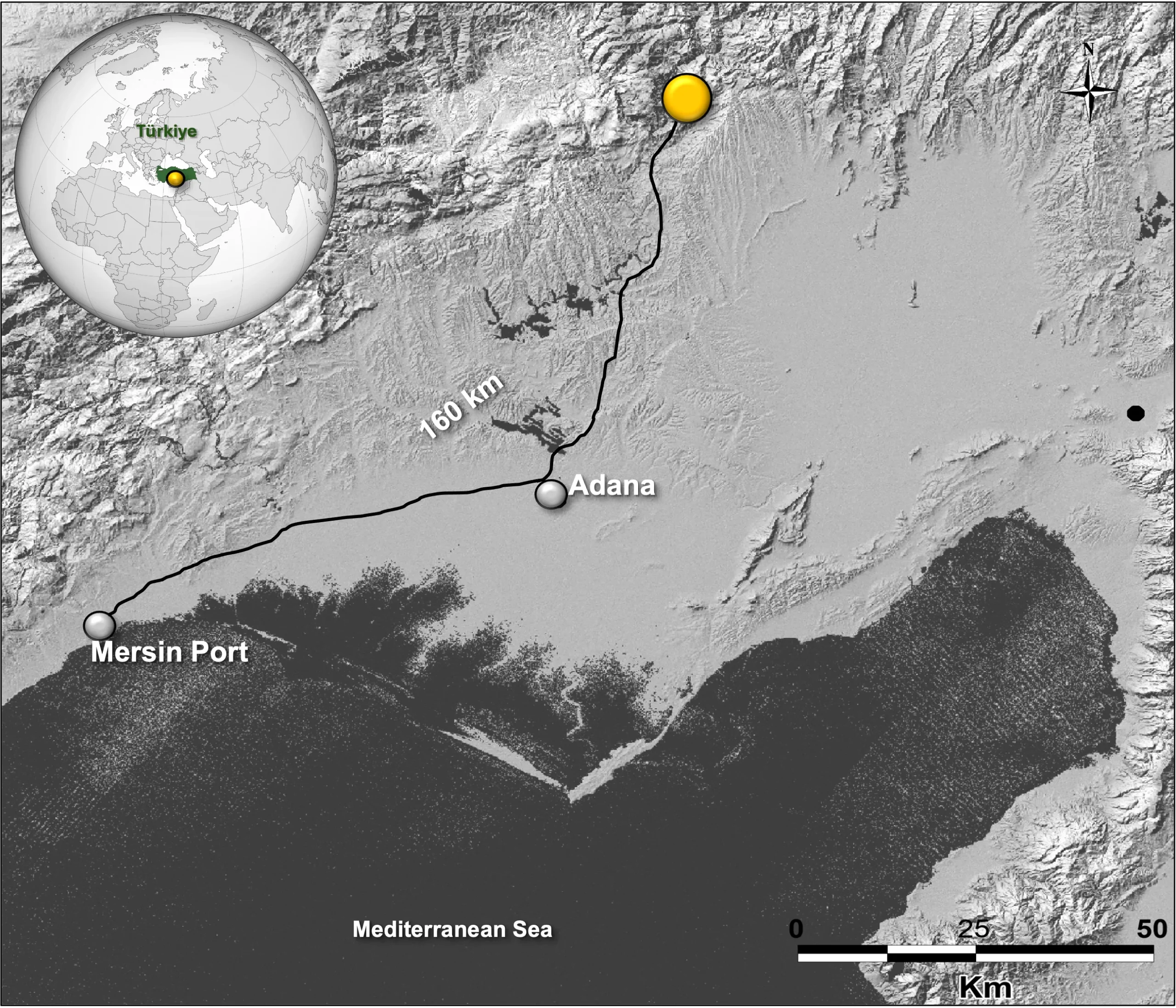
Great Infrastructure: To ramp up quickly to production was because of readily available infrastructure
Horzum AS has a mandate to explore, develop and mine for zinc and lead mineralization in the provinces of Adana and Kayseri, Türkiye. The key focus area is the Pasinex properties concentrated along the HZT extending at least 20 kilometres to the north of Horzum Mine.
Türkiye’s geology is very complex and consists of several continental fragments (terranes) which were joined together into a single landmass in the late Tertiary. Türkiye is geologically divided into three main tectonic units: the Pontides, the Anatolides-Taurides and the Arabian Platform. Several thousand meters of shallow marine carbonates were deposited over the Anatolide-Tauride terrane during the Mesozoic. The terrane was intensely deformed, partly metamorphosed and intruded by calc-alkaline magmatism during the Late Cretaceous Alpide orogeny.

Map showing the distribution of units in the Taurus belt. In Turkey, the Taurid mountain belt contains the rock units, which were deposited from Cambrian to Tertiary. Numerous carbonate-hosted zinc-lead deposits occur in those rock units. The mineral districts within they occur include Zamanti (Nigde, Kayseri, Adana and Kahramanmaras), Ulukisla-Bolkardagi (Nigde), Anamur-Ortakonus (Mersin), Gazipasa-Aydap (Antalya), Ermenek-Goktepe (Konya), Bozkir-Kucuksu (Konya), Hadim-Kizilgeris (Konya) and Kozan-Horzum (Adana).
The project area straddles both the Bozkir and Geyik Dagi Units of the Central Tauride Belt portion of the Tauride-Anatolian Terrane. Post-Devonian-age strata overlie these two units in places. All three rock packages are known to host zinc mineralization.
The Pasinex properties lie within the 80 kilometre-long corridor between the historical Horzum zinc mine in the south and the historical Ak cal/Belbasi zinc mines near Tufanbeyli in the north. It is underlain by a northeast-southwest trending belt of carbonate-dominated rocks which range in age from Cambrian to Upper Cretaceous. These limestones host reef breccias (which control zinc deposition near Tufanbeyli) and are subject to faults and fractures, dissolution collapse breccias, and lithological transitions (which control zinc deposition at Horzum). These limestones are primary targets for Carbonate Replacement-type zinc-lead deposits.
Carbonate Replacement Deposits (CRD) are orebodies of metallic minerals formed by the replacement of sedimentary, usually carbonate, rock by hydrothermal metal-bearing solutions in the vicinity of igneous intrusions. The mineralogy changes with distance from the intrusive rock. Closest to the intrusion is the copper-gold zone; next is the lead-silver zone, then the zinc-manganese zone. Typically CRD deposits are much younger than their host carbonates. This is in contrast to Mississippi Valley Type (MVT) deposits typically occurring along passive tectonic margins where the ages of the mineralization and the host carbonate are very similar and the ore fluids are typically low temperature (100 °C-150 °C) and have the composition of basinal brines.
The shapes of CRD deposits are often strongly controlled by faults and fractures in the rocks through which the mineralizing fluids flowed resulting in deposit shapes including “chimneys” for deposits with vertical dispositions, and “mantos” for deposits with horizontal, blanket-like orientations. Chimney deposits are often formed closer to their igneous source while manto deposits often occur further away and are defined by a strict stratigraphic control on their distribution, generally within a porous formation within a structural trap site. The igneous link to manto deposit formation is usually not conclusively proven. CRD deposits are notoriously difficult to explore for as there is a sharp contact between high grade mineralization and barren host carbonate rock. Limestone just inches from the mineralization can appear fresh with no alteration or geochemical signature.
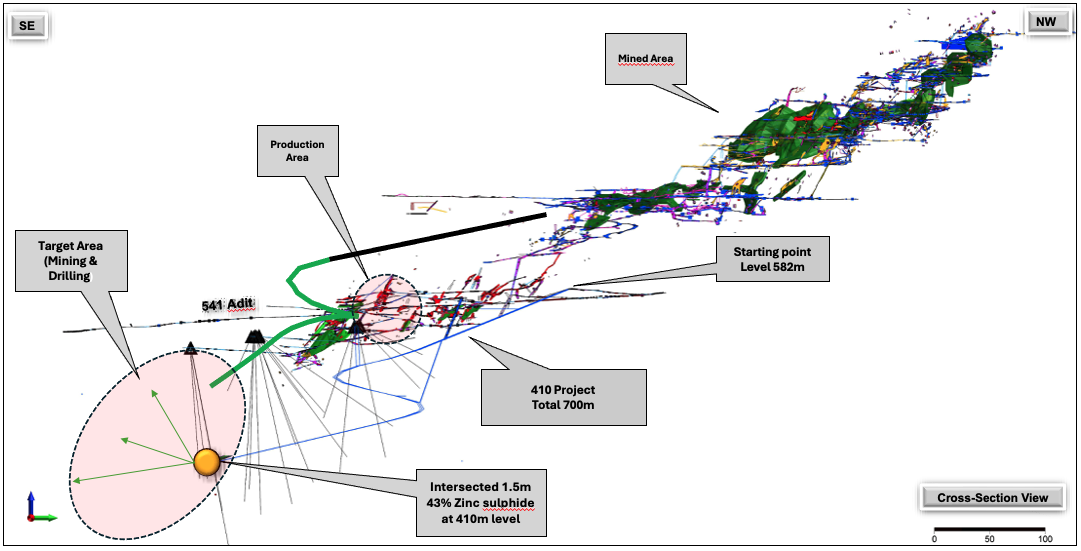
Geochemical characteristics of the Horzum and Pinargozu deposit strongly suggest that they are CRD deposits, rather than MVT. It is thought that Pinargozu is at the oxidized manto “top” of what they conjecture could be a larger CRD orebody at depth (see figure below).
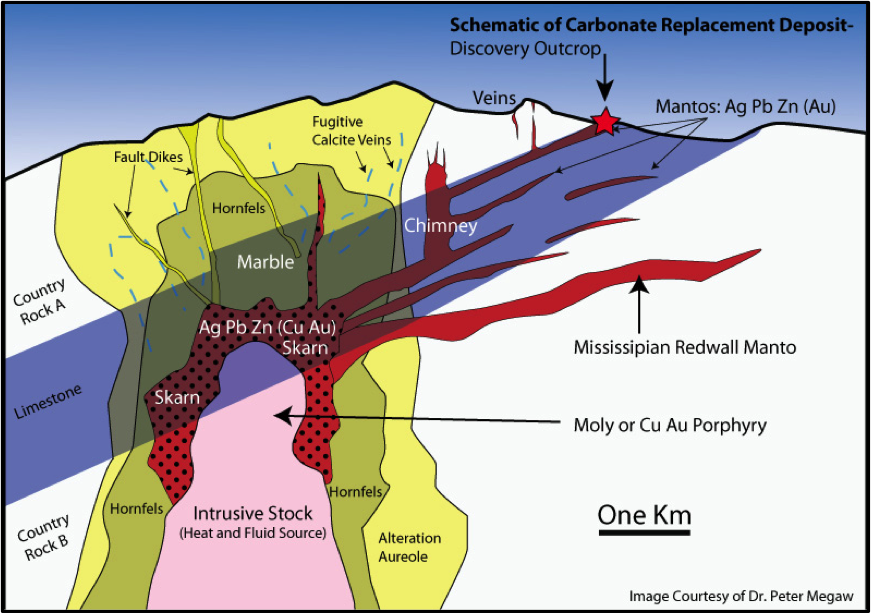
Skarn deposits are formed by direct reaction of intrusive rocks with carbonates and occur in contact with or within the igneous intrusions. No intrusive rocks have been mapped. However the possibility exists for igneous bodies and skarn deposits at depth.